
WELCOME BONUS 300%
UP TO €2000 + 100
FREE SPINS
UP TO €2000 + 100
FREE SPINS
Home → Blackjack
Blackjack at Slotexo-Casino: Variants, Rules and Payouts
Card Counting at Shuffle Master Table: why it fails
The Shuffle Master table at Slotexo-Casino employs an automated shuffling system, making traditional card counting strategies ineffective. While Blackjack Insurance offers a payout of 2:1, its theoretical RTP is 92.53%, a figure significantly lower than optimal play on the main hand. This side bet is best avoided by players adhering to basic strategy, which dictates its rejection unless a True Count of +3 or higher is achieved.
Blackjack Insurance functions as a separate side bet, available when the dealer's upcard is an Ace. The house edge on this bet is 7.47%, substantially impacting the overall return. In contrast, Blackjack Liberal Vegas Strip, with its favourable rules like S17 and DAS, boasts a house edge of only 0.28%, demonstrating a vast difference in casino advantage.
Adhering to the base strategy for Blackjack Insurance is crucial for players aiming to minimise losses. This strategy consistently advises against taking the insurance bet, as it increases the house edge. For example, Blackjack Auszahlung 6:5 statt 3:2, with a 6-deck shoe, presents a house advantage of 1.85%, which is considerably higher than many standard blackjack variants.
Soft Hand and Hard Hand Practically Distinguished
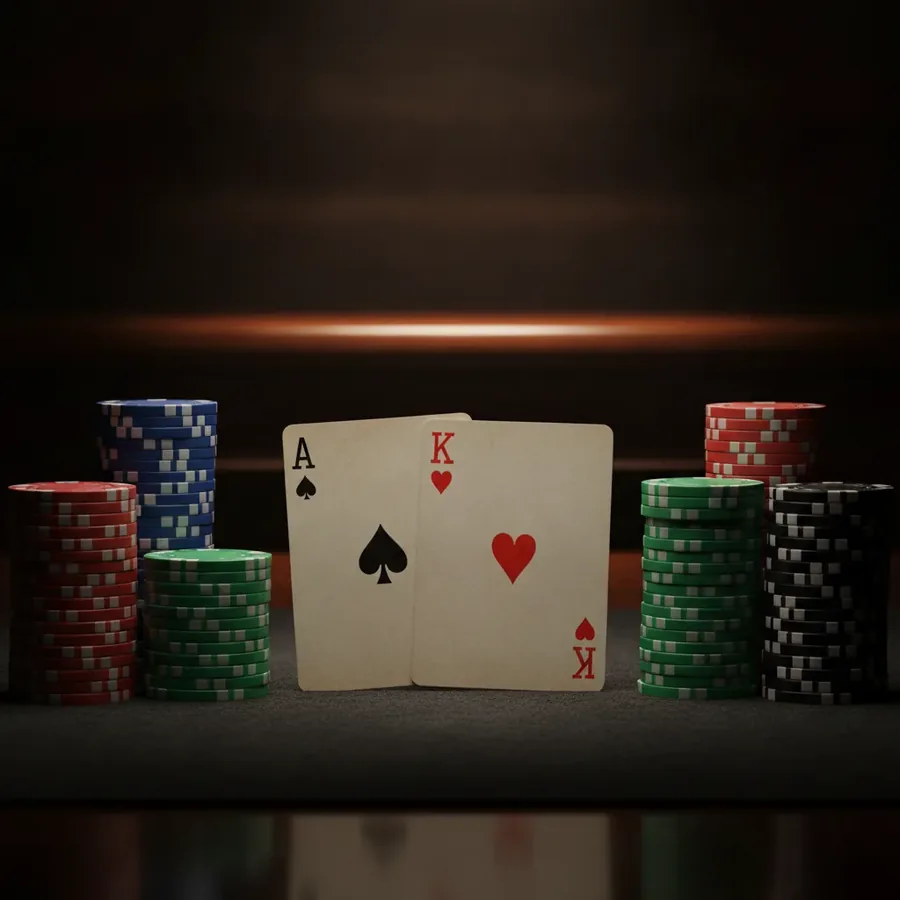
Distinguishing between a soft hand and a hard hand is fundamental to Blackjack strategy, impacting decisions like hitting or doubling down. A soft hand contains an Ace counted as 11, offering flexibility, whereas a hard hand has an Ace counted as 1 or no Aces. Blackjack Surrender, a rule allowing players to forfeit half their bet, can improve RTP by approximately 0.08 percentage points, particularly after the dealer checks for blackjack.
The presence of an Ace that can be counted as 11 defines a soft hand. For instance, an Ace and a 6 form a soft 17. In contrast, a hand with a 10 and a 7 is a hard 17. The Blackjack 6 Decks, S17, DAS variant, with an RTP of 99.54%, incorporates rules like 'Dealer Stands on Soft 17' (S17), which is more favourable to the player than 'Dealer Hits Soft 17' (H17).
Understanding these hand distinctions is vital for applying basic strategy effectively. For example, with a soft 17, a player might hit, whereas with a hard 17, the standard strategy is to stand. The Blackjack rules that modify RTP, such as H17 adding 0.22 percentage points to the house edge, directly influence the player's potential return on investment, making rule variations significant.
Live Table vs RNG Table: Speed and Limits
Live dealer games at Slotexo-Casino, such as Lightning Blackjack by Evolution, offer an immersive experience with betting limits ranging from 1 to 2,500 EUR. These tables feature unlimited players and multipliers up to 25x on winning hands, contributing to a theoretically high RTP of 99.56%. This contrasts with RNG (Random Number Generator) tables, which typically operate at a much faster pace.
Infinite Blackjack, also provided by Evolution, allows an unlimited number of players and offers four side bets, including Any Pair and 21+3, with an RTP of 99.47%. The betting limits extend up to 5,000 EUR. While RNG blackjack variants can complete hands in seconds, live dealer games introduce a more measured pace, with decisions made by human dealers and players.
Quantum Blackjack Plus Live from Playtech presents another live option with limits up to 5,000 EUR and Quantum multipliers reaching 1,000x on specific three-card 21 combinations. The RTP is stated as 99.57% with optimal strategy. The speed difference between live and RNG tables directly impacts how many hands a player can play within a given timeframe, influencing wagering requirements for bonuses.
Clicked Too Late: Hand Is Automatically Held
In online blackjack variants at Slotexo-Casino, failing to make a timely decision can result in the hand being automatically held. This is particularly relevant in faster-paced RNG blackjack games where a timer often dictates the response window. For example, Blackjack Ein Deck, klassische Regeln, 3:2 offers a superior RTP of 99.85% due to its favourable rules, but requires prompt action from the player.
The consequence of clicking too late is a forced decision, which may not align with optimal strategy. If a player intends to hit but the timer expires, the hand is automatically stood upon. This can lead to suboptimal outcomes, especially when compared to games like Blackjack Liberal Vegas Strip, which features a very low house edge of 0.28% due to a combination of player-friendly rules.
This automatic holding mechanism means players must be attentive and familiar with basic strategy to avoid unwanted outcomes. Unlike a live dealer game where a dealer might grant a moment's grace, RNG tables are programmed for efficiency. The Blackjack Auszahlung 6:5 statt 3:2 variant, with its significant 1.85% house advantage, highlights how quickly poor decisions or missed opportunities can erode potential winnings.
Ignored Basic Strategy Chart: 1 Percent Wasted
Deviating from the basic strategy chart in blackjack can lead to a significant increase in the house edge, effectively wasting potential returns. For instance, employing basic strategy on Blackjack 6 Decks, S17, DAS with an RTP of 99.54% maximises the player's advantage. Ignoring this chart means forfeiting approximately 1% of the theoretical return, a substantial amount over extended play.
The Blackjack Insurance side bet, with its 7.47% house edge, exemplifies a deviation from optimal play, as basic strategy recommends always rejecting it. Even seemingly small rule changes, like shifting from a 3:2 to a 6:5 payout for blackjack, add about 1.39% to the house edge. This underscores the importance of understanding and applying the mathematically derived basic strategy.
Players who ignore basic strategy on a game like Blackjack Ein Deck, klassische Regeln, 3:2 (RTP 99.85%) are essentially gifting the casino a larger portion of their wagers. A table with a 0.15% house advantage is already favourable; neglecting strategy can push this figure considerably higher, diminishing the player's long-term prospects and potentially costing them around 1% or more in expected value.
Blackjack variants at a glance
| Variant | Payout | House edge | Rule | Bet range |
|---|---|---|---|---|
| Blackjack Liberal Vegas Strip (liberale Regeln, 3:2) | 99.72% | 0.28% | Günstigste Regelkombination: S17 + DAS + Resplit + Late Surrender. Standardabweichung 1,15 | Blackjack 3:2, Gewinn 1:1 |
| Blackjack 6 Decks, S17, DAS, DOA, Auszahlung 3:2, Basisstrategie | 99.54% | 0.46% | Dealer steht auf Soft 17; Verdopplung auf jeder Zweierkarte; Verdopplung nach Split erlaubt; keine Aufgabe. Basisstrategie ist für diesen Wert zwingend | Blackjack 3:2, normaler Gewinn 1:1, Insurance 2:1 |
| Blackjack Ein Deck, klassische Regeln, 3:2 | 99.85% | 0.15% | Weniger Decks = niedrigerer Vorteil; ein Deck gibt ca. −0.48 Prozentpunkte gegenüber 8 Decks. Oft durch 6:5 Auszahlung kompensiert. | Blackjack 3:2, Gewinn 1:1 |
| Blackjack Surrender (Late Surrender) – Regel-Effekt | n.a. (Regel-Modifikator) | −0.08 Prozentpunkte | Spieler gibt Hand nach Dealer-Blackjack-Prüfung auf, verliert die Hälfte des Einsatzes. Verbessert RTP um ca. 0.08 Prozentpunkte. Early Surrender ist wesentlich wertvoller (bis −0.6 Prozentpunkte), aber extrem selten. | Rückzahlung 50% des Einsatzes |
| Blackjack Insurance / Versicherung (6–8 Decks) | 92.53% | 7.47% | Separate Nebenwette bis 50% der Hauptwette, wenn der Dealer ein Ass hat. Basisstrategie schreibt IMMER Ablehnung vor (außer Karten zählen bei True Count ≥ +3). Bei einem Deck Vorteil ≈ 5.88% | Insurance 2:1 |
| Blackjack Auszahlung 6:5 statt 3:2 (6 Decks) | 98.15% | 1.85% | Ersatz von 3:2 durch 6:5 fügt exakt +1.39 Prozentpunkte zum Vorteil des Casinos hinzu – stärker als jede andere Regeländerung. Bei $10 Einsatz zahlt Blackjack $12 statt $15. | Blackjack 6:5, Gewinn 1:1 |
Place Side Bet before cards are dealt
Side bets in Blackjack, such as those offered in Infinite Blackjack by Evolution, allow players to wager on outcomes beyond the standard hand. These bets, like 'Any Pair' or '21+3', are placed before the cards are dealt, adding an extra layer of potential excitement. They are a common feature in many live casino offerings, providing additional betting opportunities beyond the main game.
The 'Bust It' side bet in Infinite Blackjack, for instance, allows players to bet on whether the dealer will bust. Payouts for these side bets can vary significantly, with some offering substantial multipliers. While not all side bets are present in every game variant, they are a consistent feature designed to enhance player engagement and offer alternative ways to win.
These additional wagers come with their own house edge and RTP figures, which can differ from the main game. For example, the 'Insurance' side bet in some Blackjack variants has an RTP of 92.53%, considerably lower than the main game's typical RTP. Players should be aware of these distinct probabilities when deciding to place a side bet.
How many decks are in the shoe?
The number of decks used in a Blackjack shoe significantly impacts the house edge. A game with 6 decks and rules like S17, DAS, and DOA, with a 3:2 payout, has a house edge of 0.46%. This is a common configuration for many digital Blackjack variants. Players should note that fewer decks generally favour the player.
In contrast, a single-deck Blackjack game with classic rules and a 3:2 payout boasts a very low house edge of 0.15%. This represents a difference of approximately 0.31 percentage points compared to the 6-deck game. However, single-deck games are often compensated by less favourable payouts, such as 6:5, which dramatically increases the house advantage.
The 'Blackjack Auszahlung 6:5 statt 3:2' variant, using 6 decks, exemplifies this. Replacing the standard 3:2 payout with 6:5 increases the house advantage by 1.39 percentage points, making it a more significant factor than other rule changes. This means for every 100 EUR bet, a player would receive 120 EUR instead of 150 EUR.
Bonus 100 EUR with 10 percent credit
The welcome bonus at Slotexo-Casino offers a substantial boost to new players, providing 300% up to €2,000 plus 100 free spins. For a player depositing 100 EUR, this translates to an additional 300 EUR in bonus funds, bringing their total playing balance to 400 EUR. This initial deposit triggers the full percentage of the welcome offer.
It is important to understand how different game types contribute to bonus wagering requirements. Table games, including Blackjack, typically contribute only 10% towards the wagering requirements. This means that for every 100 EUR wagered on table games, only 10 EUR counts towards clearing the bonus. Slots, however, contribute 100%.
Therefore, a player aiming to clear a bonus with a 100 EUR deposit, which grants 300 EUR in bonus funds, would need to meet specific wagering requirements. If the wagering requirement is 40 times the bonus amount (40 x 300 EUR = 12,000 EUR), playing only table games would necessitate a total wager of 120,000 EUR (12,000 EUR / 10%).
Why Loss Progression Quickly Reaches Table Limit
The rapid escalation of losses in certain betting strategies is often tied to the inherent house edge present in casino games. Even a seemingly small house edge, like the 0.28% in Blackjack Liberal Vegas Strip, can lead to significant cumulative losses over time when combined with aggressive betting patterns. This is a fundamental aspect of casino mathematics.
For example, if a player consistently bets at the table limit and experiences a series of losing hands, their financial exposure can increase dramatically. The 'Blackjack Auszahlung 6:5 statt 3:2' variant, with its 1.85% house advantage, is particularly susceptible to this phenomenon. A losing streak here depletes funds at a faster rate than in games with a lower house edge.
Strategies that involve doubling down on losses to recoup previous stakes are prone to hitting table limits. If a player’s bet size increases with each loss, and they are playing a game with a disadvantageous payout structure, like a 6:5 Blackjack payout, the progression towards the maximum bet can be swift. This is further exacerbated by the fact that the casino's RTP is always slightly below 100%.
Splitting Eights vs Standing on 16
In Blackjack strategy, the decision to split an 8 or stand on a 16 is a critical one based on the dealer's upcard. Splitting two 8s is generally recommended because two hands of 8 are less advantageous than two separate hands, each starting with an 8. The goal is to improve the player's position against the dealer's potential hand.
Standing on a total of 16 is often a difficult decision, as it is a weak hand that is prone to busting if another card is drawn. However, the probability of busting is high, and in many scenarios, it is considered the correct play, especially when the dealer shows a strong upcard. The optimal strategy dictates the best course of action.
For instance, against a dealer's upcard of 7 or higher, standing on 16 is often the mathematically superior choice to splitting 8s. While splitting 8s aims to create two potentially winning hands, standing on 16 minimizes further losses when the dealer is likely to have a strong hand, such as a 17 or higher.
What Peek Means with a Dealer Ace
When a dealer's upcard is an Ace, a peek is performed to check for Blackjack. This procedure is standard in games like Blackjack Split / Double / H17, where the dealer checks their hole card before any player action. This rule modification can affect the Return to Player (RTP) by approximately 0.08 percentage points if the dealer hits soft 17.
The dealer's hole card is revealed to ascertain if they have a Blackjack, which is a total of 21 with two cards. If the dealer has Blackjack, any player bets are lost unless the player also has Blackjack. This peek is a crucial element in determining the game's flow and the potential for player losses or pushes.
The absence of a dealer peek with an Ace can lead to a significantly higher house edge, particularly in games with fewer decks. In a single-deck game, the advantage for the casino can increase substantially if the dealer does not check for Blackjack, impacting the player's overall return.
What doesn't count as Blackjack after Split?
A common rule clarification is that a total of 21 achieved after splitting Aces does not automatically count as a Blackjack. For instance, in Blackjack Split / Double / H17, if a player splits Aces and draws a ten-value card, this hand is considered 21, not a Blackjack, and typically pays 1:1.
This distinction is important because a natural Blackjack, achieved with the initial two cards dealt, usually pays 3:2, offering a higher return than a standard win. In contrast, a 21 achieved after a split, even with an Ace and a ten-value card, generally returns only the original bet amount.
The rule regarding Blackjack after a split can vary between game variants and casinos. While Blackjack Liberal Vegas Strip might allow for more flexible splitting rules, the core principle that a post-split 21 is not a natural Blackjack often remains. This rule impacts the game's RTP and strategic considerations.
How long do 100 EUR last at a 1 EUR table?
At a 1 EUR betting table, a bankroll of 100 EUR could theoretically last for 100 individual hands, assuming no losses. However, this calculation does not account for the house edge, which averages 0.15% in Blackjack Ein Deck, klassische Regeln, 3:2. This means that over time, a small portion of each wager is retained by the casino.
Considering a Blackjack Auszahlung 6:5 statt 3:2 game, where the house edge increases to 1.85%, the 100 EUR would diminish faster. For example, a 1 EUR bet on a Blackjack would yield 1.20 EUR instead of 1.50 EUR, reducing potential winnings and extending the session duration less effectively.
The duration of 100 EUR at a 1 EUR table is also influenced by game rules like 'Late Surrender', which can improve RTP by approximately 0.08 percentage points. This means players might experience slightly longer play sessions by strategically using surrender options, though it is not a guaranteed outcome for every hand.
Six Decks to Eight Decks in the Shoe
The number of decks used in a shoe can influence the house edge. For example, switching from 8 decks to 6 decks in a standard Blackjack game can reduce the house advantage by approximately 0.02 percentage points. This minor adjustment can offer a slightly more favourable environment for the player.
Games like Blackjack 6 Decks, S17, DAS, Auszahlung 3:2, Basisstrategie offer a house edge of 0.46%, which is competitive. However, the introduction of a larger number of decks, such as eight, can marginally increase the house's advantage compared to games with fewer decks, all other rules remaining equal.
The difference between a 6-deck and an 8-deck shoe is subtle but can be a factor for dedicated players. In Blackjack Insurance, a side bet where the house edge is a significant 7.47% with 6-8 decks, the number of decks has a less pronounced effect compared to the main game due to the bet's inherently high disadvantage.
Bonus Lost Due to 10 Percent Contribution
The 300% welcome bonus up to €2,000, along with 100 free spins, has specific wagering requirements that affect how quickly players can access bonus funds. For instance, table games contribute only 10% towards the wagering requirement, meaning a €10 bet on a table game contributes just €1.
This 10% contribution means that a substantial amount of gameplay is required to clear the bonus, especially if a player primarily engages with table games like Blackjack. To wager the full €2,000 bonus, a player would need to bet €20,000 on table games (€2,000 / 0.10 = €20,000).
Slots, conversely, contribute 100% to wagering requirements. This significant difference means that players aiming to fulfil the bonus terms efficiently would benefit more from playing slots. A €2,000 bonus would require €2,000 in slot wagers, making it a much faster path to unlocking bonus winnings compared to table games.
Contact
Live - online chat
Banking









Providers












Slotexo Casino 2026